


When it comes to low carbon electricity, nuclear and renewable energy are the top competitors in most countries. But renewables often get a bad reputation because proponents of nuclear (typically nuclear energy companies) want to protect their bottom line.
There is a lot of misinformation about renewable energy perpetuating the media and the Internet. Today, we’re going to debunk these myths.
The majority of nuclear power reactors are classified as Generation 2. Generation 2 reactors are largely considered obsolete. New nuclear power stations are classified as Generation 3 or Generation 3+.
There are only four Generation 3 reactors in operation today, all of which are in Japan. Their performance has been unimpressive thus far. There are no Generation 3+ reactors operating today, but there are several under construction in the U.S., Europe and China. Unfortunately, these projects are all behind schedule and way over-budget.
It can be argued that nuclear energy is the one not ready to replace fossil fuels.
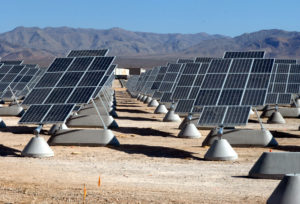
Wind and solar are seeing rapid growth and quickly becoming more affordable. Solar and wind farms can be planned and constructed in just 2-3 years and can easily replace fossil fuels right now.
It is true that on-ground solar farms and hydro-electric dams can occupy large areas of land. However, rooftop solar panels, which are highly prevalent in Australia and Germany, require no additional land.
On-shore wind farms are usually located on farms, and occupy just 1%-2% of the land. How much land they require will be dependent on the type of wind turbine. A horizontal-axis turbine typically requires less space than the vertical-axis design. These have two or three blades and operate upwind, meaning the blades face the wind (similar to how the electromagnet works in the best rowing machines on the market).
It is true that nuclear energy and most renewable energies release no CO2 while in operation. However, when you compare the entire life cycle for nuclear (from mining raw materials to managing waste) to renewables, it’s easy to see that nuclear is far from eco-friendly.
According to Manfred Lenzen, life-cycle emissions for nuclear are around 60 grams of CO2 per kilowatt hour when using high-grade uranium ore. Natural gas produces 500-600 grams, while wind produces 10-20 grams.
Experts say there are only a few decades of high-grade uranium ore reserves left. Over time, the ore-grade will decline, making nuclear even less efficient. Mining will need to occur more frequently, which will require the use of diesel-fueled equipment. Greenhouse gas emissions will undoubtedly be higher.
Lenzen estimates that when low-grade uranium is in use, the life-cycle emissions for nuclear will increase to 131 grams per kilowatt hour.
Proponents of nuclear energy argue that it can be used on the same grid with renewables, but the two are poor partners.
High-level nuclear waste is currently being stored in dry casks or pools. There are no permanent repositories in place anywhere in the world. The proposed storage repository at Yucca Mountain was canned after spending $13.5 billion. Finland and Sweden are currently working on underground repositories.
Even if a permanent storage solution can be found, there are still social and economic issues to consider, as the waste must be stored for 100,000 years.
Renewable energy, on the other hand, requires no permanent storage solution because it produces no waste.
Nuclear energy, while eco-friendlier than coal, still poses problems in the fight against climate change. Renewable energy is not perfect, but these myths are slowing progress in the industry, which could resolve these issues.

Uranium is an element which exists naturally in the Earth’s crust; specifically in sedimentary rocks, such as sandstone. In its elementary state uranium is only weakly radioactive due to its unstable isotopes, which vary naturally. Uranium ore must be mined and processed in order for it to be used commercially as fuel and in weapons.
Uranium ore is currently mined in around 20 countries, though more than half of the world’s supply of uranium comes from mines in just three countries: Australia, Canada and Kazakhstan. Other notable uranium producers include China, Namibia, Niger, Russia and the USA.
There are three methods of mining uranium: traditional open-pit mining, underground mining and in-situ leaching. Open-pit mining is only possible if the uranium ore is near the surface of the rock, and involves using machinery to remove soil and rock to reach the uranium ore deposits below. Underground mining is necessary where the uranium ore is too far underground to be reached by open-pit mining. The uranium ore is blasted and the resulting debris transported to the surface.
After both open-pit and underground mining, the uranium ore concentrated in the extracted rocks is weak, usually only around 0.3%. The rocks are crushed to a fine powder and added to water to create a slurry. The slurry is then ‘leached’ with sulphuric acid, or sometimes an alkaline solution if certain mineral rocks are present, to separate the uranium from the base rock.
In-situ leaching, known as in-situ recover mining in the US, has now become a more widely-used mining method, as it is more economical and environmentally friendly than open-pit or underground mining. In-situ leaching simplifies the mining process by essentially creating a slurry while the uranium is still in the ground. Heavily oxygenated water is pumped into a uranium well, dissolving the uranium but leaving the base rock intact. The water based uranium is then pumped back to the surface, where it’s already ‘leached’.
All three mining methods produce uranium suspended in liquid. The liquid is filtered and the uranium extracted from it by ion exchange to form a uranium oxide concentrate. This is a bright yellow powder, known as yellowcake. Yellowcake is only mildly reactive and must go through the enrichment process before uranium is usable in a commercial way.
To enrich the uranium oxide, it is first converted to gas, (uranium hexafluoride) though a process called calcining, essentially heating to a very high temperature. The gas can then be enriched to make it concentrated in uranium isotope 235, the isotope most needed for nuclear power. To do this, the centrifuge process is used, separating the uranium 235 from waste uranium by repeatedly diffusing the gas through a silver-zinc membrane in thousands of fast-spinning vertical tubes.
Once the uranium hexafluoride has been enriched, it is chemically converted to uranium dioxide powder. The powder is shaped into small cylindrical fuel pellets and heated to solidify them. The uranium dioxide pellets are slotted into thin tubes to form rods of fuel, which are grouped together to create fuel assemblies of several metres each.


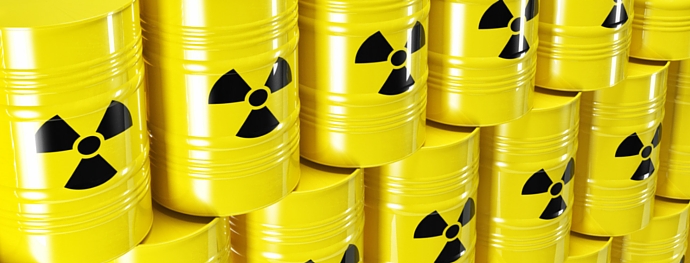
Radiation in its simplest terms can be defined as the transfer of energy in the form of waves or particles through space and matter. It is generally categorized into two forms – ionized, which is named due to its high kinetic energy and ability to ‘ionize’ atoms or molecules, and non-ionized, which of course is unable to ionize the matter it’s passing through. It’s this ionizing form in particular that can be harmful to humans, as the kinetic energy that this radiation possesses is strong enough to break the chemical bonds that comprise organic matter.
To understand how radiation becomes ionized in the first place matter needs to be looked at on a molecular level. An excess of energy or mass (or both) in an atom causes it to become unstable due to the nature of its structure. In its unstable form this excess energy has to be emitted for the atom to re-stabilize. It is therefore this emission of energy that is categorized as ionizing radiation.
Common examples of ionized radiation are ultraviolet, gamma, alpha and beta waves. X-rays also produce ionized radiation in the form of electromagnetic waves. The absorption of these waves based on the differing densities of body matter is how X-rays are used to examine bones during an injury.
Huge disasters such as those witnessed at Chernobyl are a result of reactions which also produce ionized radiation. When these reactions escalate out of control, so much excess energy is produced that massive cooling processes are needed to reduce the heat. If these cooling processes fail, a meltdown is the result.
Ultraviolet radiation produced by the sun is another form of ionized radiation, however due to the nature of our ozone layer and atmosphere the vast majority of high-energy UV radiation is absorbed before reaching the ground.
Radiation in this form is generally too low-energy to ionize atoms, and as a result only has enough energy to affect the rotational, vibrational or electronic valence configuration of molecules and atoms. This form, however, is still able to produce some amount of ionization due to heat. While ionized radiation can cause ionization with single particles, large amounts of non-ionized radiation can become ionizing if enough heat is deposited. This phenomenon is known as thermal ionization.
Examples of non-ionized radiation can be found throughout many consumer products that aren’t particularly harmful when exposed to. Examples include microwaves, visible light, infrared and radio waves.
Harmful forms are also possible, especially in the case of Ultraviolet radiation which is non-ionized at low wavelengths. While Ultraviolet can provide health benefits in the form of Vitamin D, negative side-effects such as DNA damage, cancer, and damage to collagen are possible during prolonged exposure.
As seen above, humans are exposed to many forms of radiation on a daily basis. Whether it’s background radiation from sources such as the sun, or consumer products like a microwave, radiation is unavoidable and mostly harmless. Only when the radiation has enough kinetic energy to break chemical bonds and is ionized do significant harmful effects occur.
Drinking water contains radionuclides of natural origin. They are present in different amounts and might be dangerous in high levels. Radiation is released from rocks and minerals.
Common natural radioelements which can be found in the environment are those from the uranium-238 chain. This is a natural radioactive series of many radionuclides, each descending from other. Uranium-238 (238U), radium-226 (226Ra) uranium-234 (234U), and radon-222 (222Rn) are quite common in nature. Uranium-238 (238U) and uranium-234 are often found in water, as well as 222Rn.

The thorium232 series is also presented in nature. Thorium can be rarely found in water. Although it is 3-4 times more abundant than uranium in the crust, it has poor solubility. Radium-228 (228Ra) belongs to this nuclide family and its presence in water is quite problematic since its radiotoxicity is relatively high. Potassium-40 (40K or K-40) also has wide presence.
Tritium (3H, H-3 or T) is another radionuclide which can be found in nature. It is a cosmogenic hydrogen isotope, which is being formed in the high atmosphere. It can be found in rainfalls as tritiated waterl. It also appears in nature as a result of anthropogenic activities – research and nuclear facilities. Since tritium has a low radiotoxicity, it is not considered to be really dangerous for the human health.
Natural radioactivity is not the only danger. Exposed water reservoirs can be contaminated by artificial radionuclides which fall into rivers and lakes. Accidents and nuclear explosions usually cause significant contamination of waters. This is what happened in Tokyo during the Fukushima nuclear accident. For such cases, allowed levels of artificial radionuclides in case of emergency have been set. On the other side, reference levels which give a non-significant dose to the population are set much lower than the emergency levels and are considered to be safe.
Human economic activities also cause radiation contamination. Radionuclides have been concentrated by non-nuclear industrial processes such as fertilizers production, mining, coal combustion and others.
Scientists consider that daily intakes of vitamin D by adults in the range of 8,000 IU are needed to help the body cope with radiation. It is even better is to get your vitamin D from sun exposure rather than taking oral supplements. Read more how vitamin D could help you prevent health problems cause by radiation.
The following plants and supplements are also believed to be useful to prevent health problems because of radiation: kelp, fulvic acid, coconut oil, spirulina, ginseng, whey, selenium, magnesium and others. As a general rule, your immune system has to be strong in order to cope with the sources of radiation and to keep your body healthy.
Faucet Water filters and other household adapters such as a water softener shower head can help you have clean and safe water at home, click here to find out more. Knowing how to filter radiation is the way to keep yourself and your family protected from the danger of high levels of radiation in the water your drink. This problem is often neglected by governments and people and you are the one who needs to take measures to preserve your health.

Radiation is a very broad term – both naturally occurring and man-made – but it is widely recognized as something you want to avoid, especially in high doses. The sources and types differ, but the overall effect of exposure to the kinds of radiation that cause damage to your body’s tissues is an increase in cancer risk.
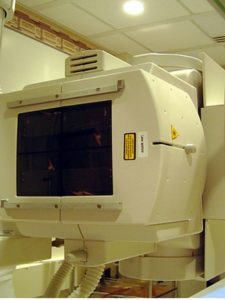
Cancer and birth defects are proven effects of what is called “ionizing” radiation, which gives an electrical charge to the matter it passes through. This kind of radiation is emitted during nuclear reactions and from X-rays. For other types of non-ionizing radiation – such as radiofrequency waves from microwaves, cell phones, and Wi-Fi – scientists have been conflicted on how they cause mutations.
Either way, it’s best to reduce your exposure and to be informed on the doses various sources emit.
To put things in perspective, exposure to a dose of 1,000,000 millirem (mrem) would be immediately lethal, but even nuclear reactor meltdowns such as Chernobyl and Fukushima do not give off this amount per individual. (Long-term effects of residual reactive material pose the serious health risk.)
Americans average between 370-620 mrem per year. Your lifestyle and where you live can increase or decrease this number. Yes, where you live in the continental United States affects this number. Sorry, Denver residents – your city’s altitude and thin atmosphere exposes you to an additional 50 mrem more radiation yearly than a New Yorker with similar personal habits.
Apart from uprooting to a new city, you can begin to minimize your exposure to radiation by being informed of these 5 everyday sources of radiation:
The average American over the age of 2 watches 4.5 hours of TV daily. The electrical conductivity in TV sets and computer monitors gives off a minimal amount of X-rays: 1 mrem per year to the typical consumer. However, there are more urgent health hazards such as obesity if you pass several hours per day immobile in front of a screen.
A colorless, odorless gas given off by decaying uranium seeps into the foundation of one out of 15 American homes and takes up residency in their basements. Luckily, you can test your house for high levels of radon and take the necessary steps to protect your family from this gas by consulting www.epa.gov.
Obviously one does not undergo medical imaging procedures on a daily basis, but as the most common source of exposure for Americans beyond normal background radiation, medical imaging bodes mentioning. Medical imaging procedures such as dental or chest X-rays send 10 mrem to the patient. Mammograms log in at 138 mrem per image, and CT scans can deliver up to 1,000. An even higher dosage procedure, the colonography, produces 10,000 mrem, which increases your risk of cancer by 1%. However, if your doctor recommends any of these procedures, you’re better off taking the radiation risk than declining the procedure.
Cell phones emit radiofrequency waves, a non-ionizing form of radiation, albeit at a low enough dose that there are no established health effects.
It should come as no surprise that cigarettes causes health problems even beyond the carcinogens in the tar component of smoke your body takes in with each inhale. Heavy smokers increase their radiation exposure by 870 mrem per year – more than doubling or even tripling their exposure compared to non-smokers.
Keep in mind that most these quotidian objects and personal habits expose you to what, in the end, is a minimal amount of radiation. To learn more about the sources and risks of radiation, consult the International Atomic Energy Agency’s findings on radiation in everyday life.